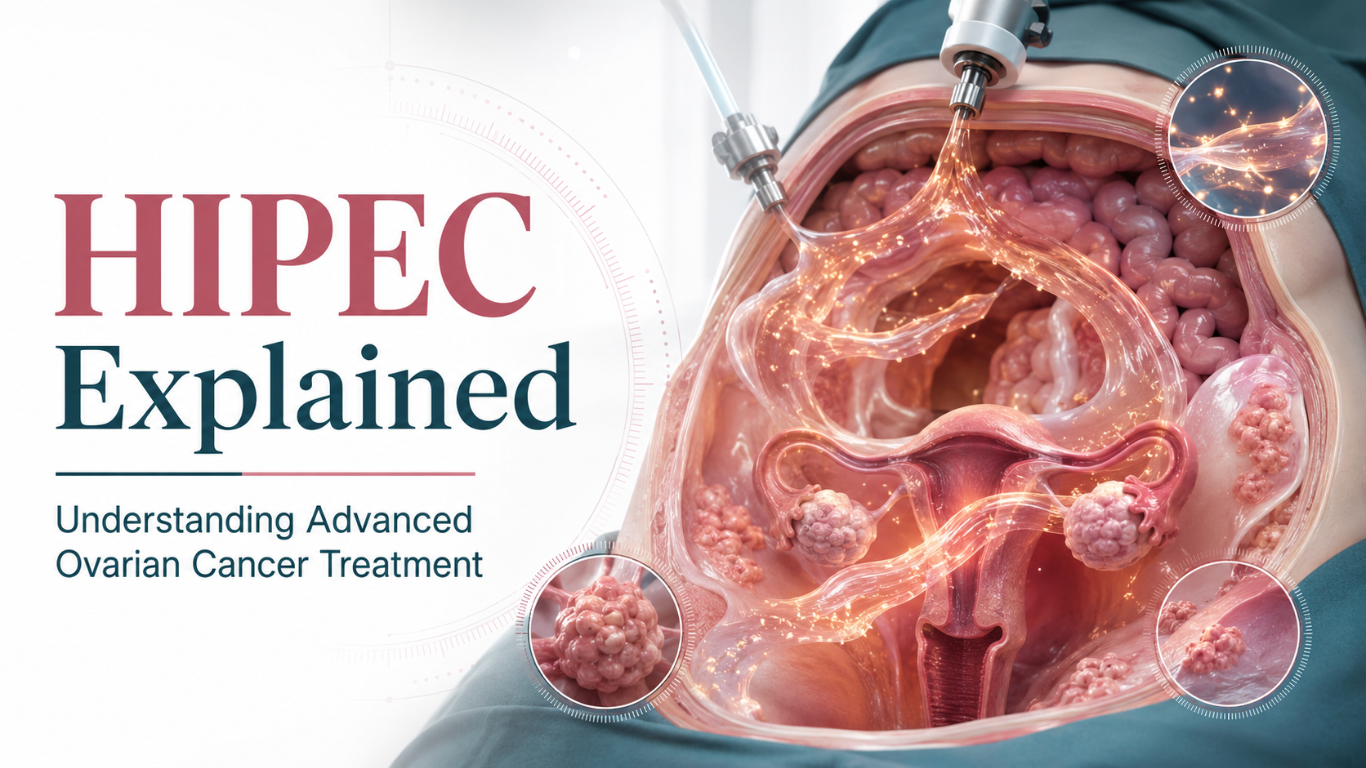
Hyperthermic Intraperitoneal Chemotherapy, or HIPEC, is an advanced treatment combining surgery and heated chemotherapy for select patients with advanced or recurrent ovarian cancer that has spread within the abdomen. This blog breaks down what HIPEC is, how it works alongside cytoreductive surgery, who may be eligible, and what patients can expect before, during, and after the procedure. Written with guidance from Dr. Shiva Gautam, Consultant Gynecological Oncologist at Fortis Hospital Noida, it aims to demystify this complex treatment option for patients and families navigating an advanced ovarian cancer diagnosis.
- Understanding symptoms, diagnosis, and treatment choices to help women approach gynecologic health concerns with greater clarity and confidence.
- Exploring cancer care options according to the type, stage, and individual circumstances of each patient and clinical situation.
- Keeping patients informed about evolving surgical techniques, treatment approaches, and developments in gynecologic oncology.
- Highlighting the importance of timely medical evaluation, appropriate follow-up, and informed conversations with a gynecologic oncology specialist.
An advanced ovarian cancer diagnosis often comes with a flood of unfamiliar medical terms, and few sound as intimidating as "Hyperthermic Intraperitoneal Chemotherapy," or HIPEC. While the name is complex, understanding what this treatment involves — and why it may be recommended — can help patients and families feel more prepared and informed about this important treatment option.
What Is HIPEC?
HIPEC is a specialized cancer treatment technique in which heated chemotherapy is circulated directly within the abdominal cavity, immediately following cytoreductive (debulking) surgery. Rather than delivering chemotherapy through the bloodstream as with standard intravenous chemotherapy, HIPEC bathes the abdominal cavity directly in heated chemotherapy solution, allowing it to reach cancer cells on abdominal surfaces more directly.
Why Combine Surgery With Heated Chemotherapy?
In advanced ovarian cancer, cancer cells can spread across the surfaces of the abdominal cavity in a pattern called peritoneal carcinomatosis. While cytoreductive surgery aims to remove all visible tumor, microscopic cancer cells too small to see or remove surgically may remain. HIPEC is designed to target exactly these remaining microscopic cells immediately after surgery, while the abdomen is still open, maximizing the treatment's reach before the abdominal cavity is closed.
The Role of Heat
Heat is not simply used to make the chemotherapy more comfortable to deliver — it plays an active therapeutic role. Heating the chemotherapy solution is believed to enhance the ability of the drugs to penetrate cancer cells and increase their cell-killing effectiveness, while the localized delivery within the abdominal cavity helps limit the whole-body side effects often associated with standard intravenous chemotherapy.
Who May Be a Candidate for HIPEC
HIPEC is not appropriate for every ovarian cancer patient. It is generally considered for patients with advanced or recurrent ovarian cancer where the disease is confined primarily to the abdominal cavity, who are otherwise healthy enough to undergo an extensive surgical procedure, and where cytoreductive surgery is expected to achieve complete or near-complete removal of visible tumor. A thorough evaluation, including imaging and overall health assessment, is essential to determine candidacy, since HIPEC is only beneficial when performed in appropriately selected patients.
What Happens During the Procedure
The HIPEC procedure begins with cytoreductive surgery, during which the surgical team works to remove all visible tumor from the abdominal cavity. Once this is complete, heated chemotherapy solution is circulated throughout the abdomen for a set period, typically around 60 to 90 minutes, while the surgical team carefully monitors the patient's temperature and overall stability. After this circulation period, the chemotherapy is drained, and the surgery is completed.
Recovery After HIPEC
Because cytoreductive surgery combined with HIPEC is an extensive procedure, recovery typically involves a longer hospital stay than standard cancer surgery, often including a period of close monitoring. Patients should expect a more gradual recovery process, with attention to nutrition, wound healing, and gradual return to normal activity over several weeks. The care team provides detailed guidance on what to expect at each stage of recovery.
Potential Benefits
For appropriately selected patients, combining cytoreductive surgery with HIPEC has been associated with improved disease control and, in some studies, extended periods without cancer progression compared to surgery or chemotherapy used alone. It's important to understand that outcomes vary by individual case, and your gynecologic oncologist can help set realistic expectations based on your specific diagnosis and disease extent.
Questions Worth Asking Your Doctor
If HIPEC has been recommended as part of your treatment plan, it's reasonable to ask your gynecologic oncologist about your specific candidacy, the expected extent of surgery, anticipated recovery timeline, potential risks and side effects, and how this approach compares to other treatment options available for your particular situation. A good specialist will welcome these questions and help you make an informed decision.
Moving Forward With Confidence
An advanced ovarian cancer diagnosis is undeniably difficult, but treatments like cytoreductive surgery combined with HIPEC represent meaningful progress in offering more effective options for appropriately selected patients. Understanding how this treatment works can help transform an intimidating medical term into a clearer picture of a carefully designed, evidence-based treatment path forward.