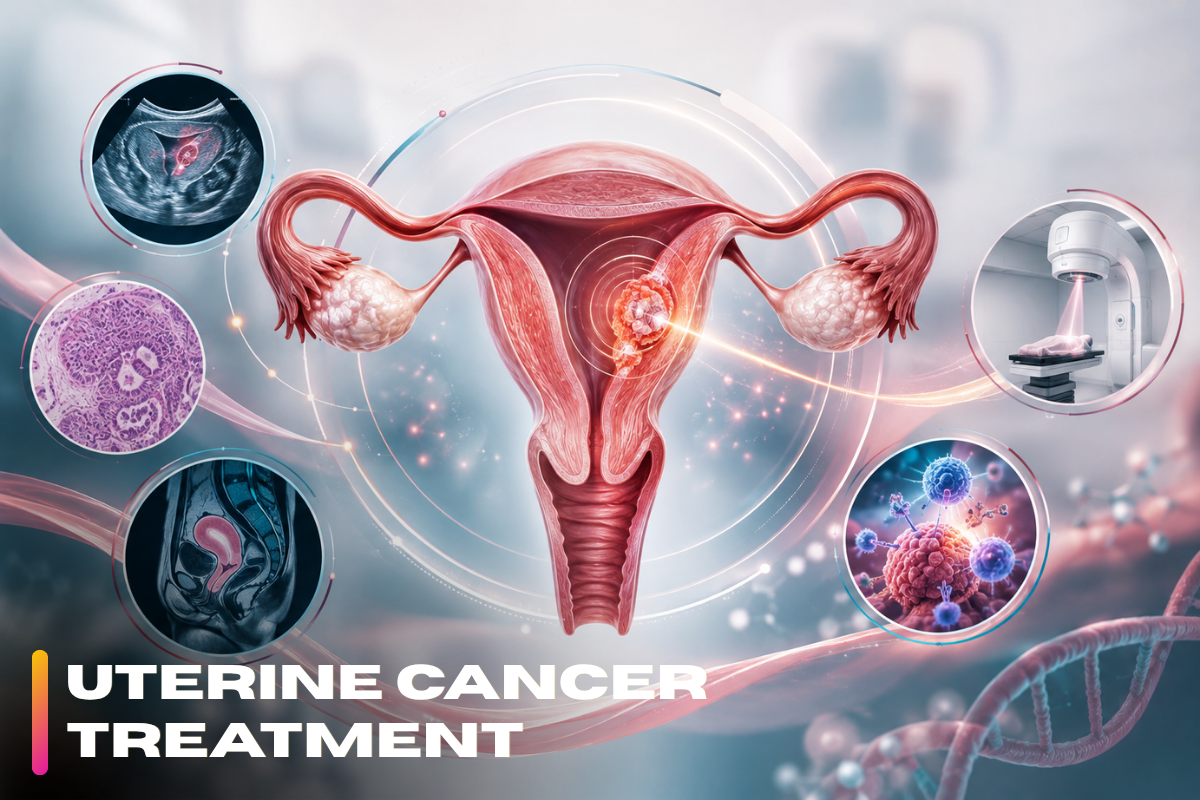
Uterine cancer, also called endometrial cancer, is the most common gynecologic cancer and often presents with abnormal bleeding after menopause or irregular periods. Dr. Shiva Gautam, Consultant Gynecological Oncologist at Fortis Hospital Noida, offers complete evaluation and treatment, including minimally invasive robotic hysterectomy with lymph node assessment for accurate staging. Treatment plans are tailored to cancer grade, stage, and each patient's overall health, with coordinated chemotherapy or radiotherapy for higher-risk cases. Early evaluation of abnormal bleeding leads to earlier diagnosis and better outcomes, and Dr. Gautam's team ensures patients understand every step of their care.

Consultation & Diagnosis
Detailed evaluation and imaging help confirm an accurate, timely diagnosis.

Personalized Treatment Plan
A tailored surgical and medical plan is created for you.

Surgery & Treatment
Surgical management according to the cancer type incorporating minimally invasive approach where indicated.

Recovery & Follow-Up
Ongoing monitoring ensures smooth recovery and long-term, cancer-free well-being.
Uterine (endometrial) cancer is the most commonly diagnosed gynecologic cancer, often caught early because it typically causes a noticeable warning sign: abnormal uterine bleeding, particularly after menopause or unusually heavy or irregular periods.
Surgical Treatment
The primary treatment is surgery — typically a hysterectomy with removal of both fallopian tubes and ovaries, along with pelvic and para-aortic lymph node assessment to accurately stage the disease. Dr. Gautam performs this using minimally invasive robotic or laparoscopic techniques wherever appropriate, meaning smaller incisions, less pain, shorter hospital stays, and quicker recovery.
Tailored Treatment by Risk Category
Dr. Gautam classifies each case by tumor grade, type, and stage to determine whether surgery alone is sufficient or whether additional treatment — radiotherapy, chemotherapy, or hormonal therapy — is needed.
Fertility-Sparing Considerations
In carefully selected young patients with very early, low-grade cancer, hormonal treatment may occasionally be considered as an alternative to surgery, under close monitoring.
Minimally Invasive Robotic Surgery
Robotic-assisted hysterectomy has become a preferred approach for many cases due to its precision and faster recovery, maintaining thorough staging while minimizing surgical trauma.
Multidisciplinary Coordination
Dr. Gautam coordinates with medical and radiation oncology colleagues for patients needing chemotherapy or radiotherapy, ensuring a smooth, well-communicated pathway.
Long-Term Follow-Up
Regular follow-up visits help monitor recovery and detect any recurrence early. Dr. Gautam also counsels patients on lifestyle factors that influence long-term risk.
Why Choose Dr. Shiva Gautam
Her training, combined with expertise in robotic and minimally invasive hysterectomy, allows precise, risk-adapted treatment at every stage. If you've experienced abnormal bleeding or a new diagnosis, her team is ready to provide expert, compassionate guidance.